
A franchise can reduce some of the uncertainty of starting a business, but it does not remove business risk. The best decisions come from comparing facts, testing assumptions and getting independent advice.
Why courier and logistics franchises attract buyer interest
E-commerce, document movement, returns and small-business shipping create repeat demand for convenient parcel points. The format can use less space than retail or food, but city-level growth does not guarantee enough transactions in every neighbourhood. Start with the exact catchment, sender mix and current service gaps.
Understand which business model is being offered
A courier opportunity may be a booking counter, collection point, delivery territory, master franchise, fulfilment partner or pickup-and-drop location. Confirm who owns customer relationships, who handles delivery staff, which services you can sell and whether the territory is exclusive.
What is included in the investment? What support continues after launch? Which assumptions drive the payback estimate?
Calculate the complete setup and monthly cost
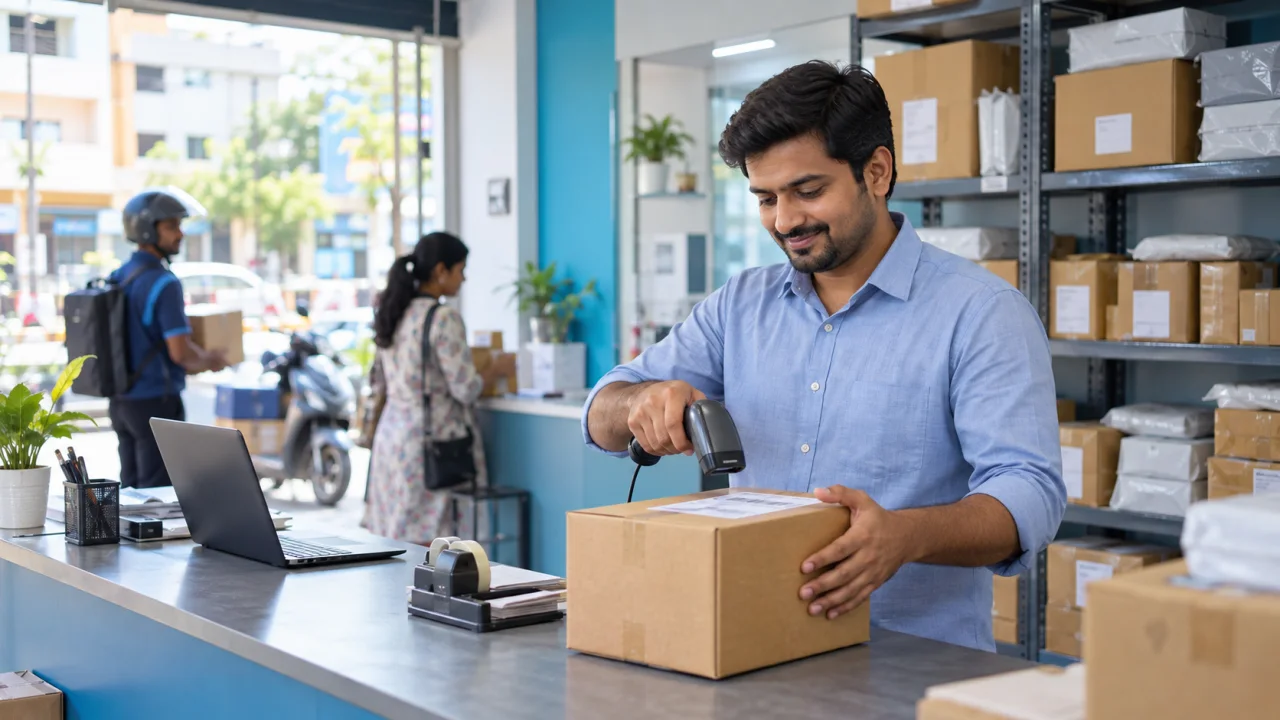
Include franchise or security fees, shop deposit, computer, printer, weighing scale, scanner, internet, packaging material, signage, licences, salaries, local pickup vehicle and working capital. Ask which deposits are refundable and what conditions apply at exit.
Model income from parcel mix—not only parcel count
Documents, lightweight e-commerce parcels, heavy shipments, international consignments, reverse logistics and cash-on-delivery services can carry different commissions. Build a monthly estimate using realistic weight bands, destinations, failed deliveries, returns and taxes.
Check commission and settlement terms in writing
Ask whether earnings are a fixed amount per shipment, a percentage of freight, a slab linked to monthly volume or a combination. Confirm when the company settles payments, how COD and claims are reconciled, and whether fuel or pickup costs are paid separately.
Evaluate territory and pickup density
Map local online sellers, offices, retailers, students and residential demand. A compact area with repeat business senders may be stronger than a larger territory with long pickup distances. Verify whether the company can appoint another point nearby or serve the same clients directly.
Test technology, claims and support
Request a live demonstration of booking, tracking, label printing, billing, COD reconciliation and complaint handling. Review liability for lost or damaged parcels, claim limits, prohibited items, support response times and backup processes when the system is unavailable.
A practical due-diligence checklist
Speak with operators handling a similar parcel volume, review their actual commission statements, inspect the agreement and test the proposed location for at least a week. Treat guaranteed parcel counts or fixed-profit promises as warning signs unless they are contractually supported and independently verified.
This guide is general information, not legal, tax or investment advice. Verify every opportunity and engage qualified professionals where appropriate.