
A franchise can reduce some of the uncertainty of starting a business, but it does not remove business risk. The best decisions come from comparing facts, testing assumptions and getting independent advice.
Why diagnostic franchises are getting searched now
Multiple pathology brands appear among the most-searched franchise names for October 2026. Preventive testing, home collection and hub-and-spoke laboratory networks make the category easy to notice, but healthcare demand does not remove operational responsibility. A collection centre succeeds only when trust, access and sample quality work together.
Collection centre, pathology lab and imaging centre are different businesses
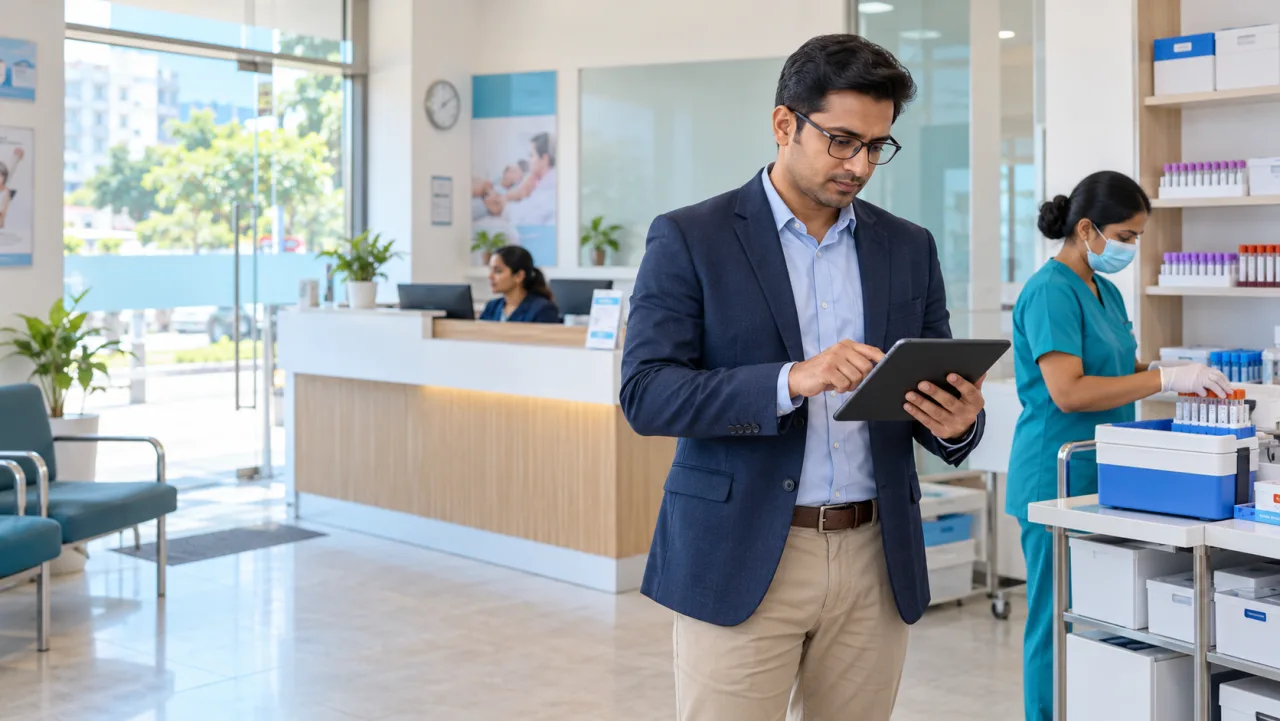
A collection centre usually receives patients, collects and prepares samples, and transports them to a parent laboratory. A testing laboratory analyses samples, while an imaging centre may provide X-ray, ultrasound, CT or MRI services. Each format has different staff, equipment, capital and regulatory requirements—never compare their investment figures as if they are the same model.
What is included in the investment? What support continues after launch? Which assumptions drive the payback estimate?
“Sample chhota ho sakta hai, responsibility nahi.”
Patient preparation, identification, labelling, storage, temperature control and transport directly affect report reliability. Confirm the parent laboratory’s documented collection manual, pickup schedule, rejection process, incident reporting and responsibility for every step before signing.
Verify registrations and standards for your exact state
Clinical-establishment rules, local trade permissions, biomedical-waste arrangements, fire or building requirements and professional qualifications can vary by location and scope. Check the current central and state requirements with competent authorities and qualified advisers instead of relying only on a sales presentation.
Build the complete setup and monthly-cost sheet
Include franchise or security payments, shop deposit, interiors, privacy-compliant collection space, refrigerator, centrifuge if required, furniture, software, internet, backup power, consumables, phlebotomist and receptionist salaries, sample transport, biomedical-waste handling, local promotion and working capital. Separate refundable amounts from non-refundable fees.
Understand revenue share test by test
Ask for the patient price, centre share, discounts, home-collection charge, package mix, credit period, cancellations and rejected-sample impact. A high headline commission can still produce weak contribution when low-ticket tests dominate or travel, staff and consumables are excluded from the calculation.
“Location se lead milti hai; quality se repeat.”
Study residential density, senior citizens, nearby clinics, corporate offices, competing centres, parking and early-morning access. Ethical local awareness can help discovery, but medical referrals must follow applicable rules. Do not build projections around informal commissions or relationships that may not continue.
Test home collection before promising scale
Home collection can widen reach but adds routing, punctuality, staff verification, cold-chain and failed-visit complexity. Define radius, time slots, minimum order, emergency escalation, digital consent and handover proof. Pilot a small zone and measure cost per completed visit before expanding.
A patient-safety-first due-diligence checklist
Visit the parent lab, confirm accreditation claims directly, inspect the agreement, verify sample pickup and report turnaround, speak with comparable partners and model a slow first year. Check complaint escalation, data privacy, pricing control, territory, exit terms and who remains accountable when a sample or report is disputed.
Sources & further reading
This guide is general information, not legal, tax or investment advice. Verify every opportunity and engage qualified professionals where appropriate.