
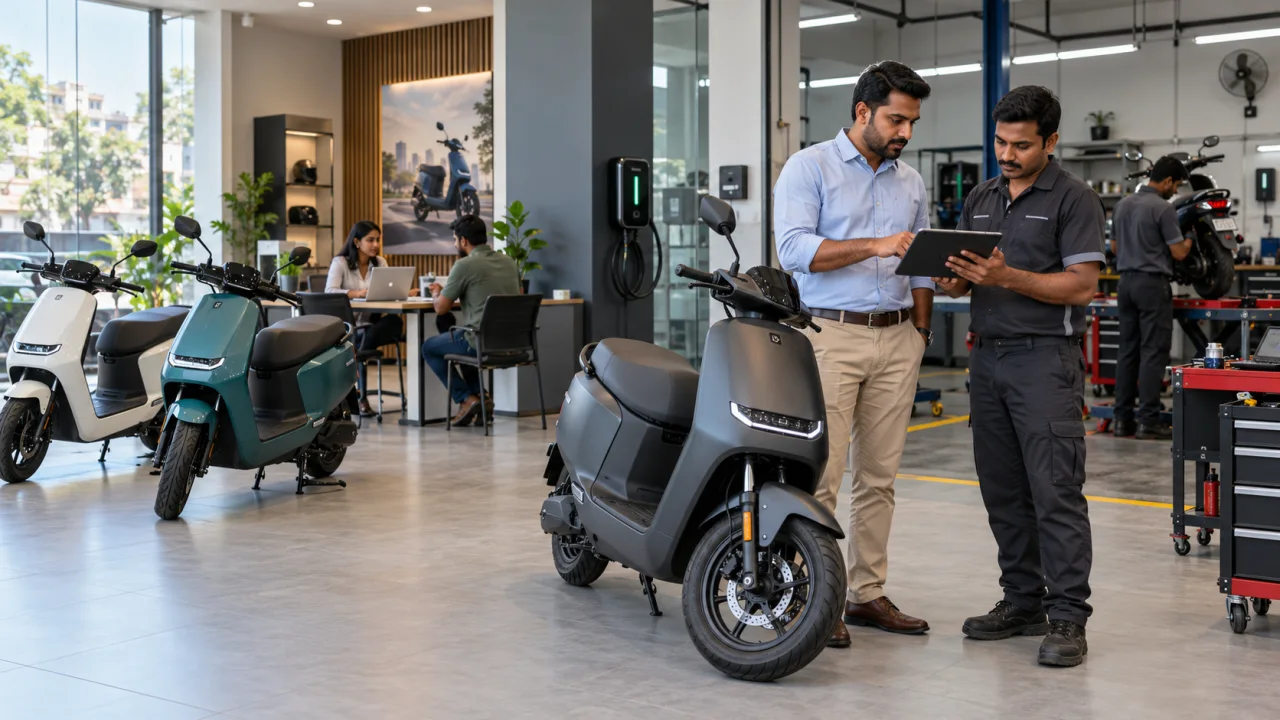
A franchise can reduce some of the uncertainty of starting a business, but it does not remove business risk. The best decisions come from comparing facts, testing assumptions and getting independent advice.
Why electric scooter dealership is trending now
Fresh October 2026 registration summaries based on VAHAN data put total EV registrations above 3.5 lakh for the month, with electric two-wheelers the largest segment. September data published by FADA also showed strong electric two-wheeler volume and higher penetration. This momentum creates genuine dealership interest, but national growth does not guarantee demand for every brand, price point or city.
Choose the dealership model before comparing cost
A single-brand authorised dealer follows one OEM’s territory, store, inventory and service standards. A sub-dealer may operate under a regional distributor with less control and different margins. A multi-brand outlet can offer more choice but must establish vehicle sourcing, registration, warranty and after-sales authority for every model. Ask exactly which legal entity contracts with you and invoices the customer.
What is included in the investment? What support continues after launch? Which assumptions drive the payback estimate?
PM E-DRIVE is not a dealership allotment scheme
PM E-DRIVE supports eligible electric vehicles and infrastructure; it does not sell private dealership territories. The official portal publishes approved models and scheme rules, while the eligible customer incentive is handled through the prescribed OEM and e-voucher process. Treat any promise of a guaranteed government dealership, fixed subsidy commission or special approval against an urgent personal payment as a red flag.
How much investment should you model?
No universal EV dealership price exists. For early feasibility, model roughly ₹10–25 lakh for a compact multi-brand or sub-dealer outlet and ₹25–60 lakh or more for a single-brand showroom with workshop, demo vehicles, tools and meaningful stock. Larger city facilities can require substantially more. These are independent planning bands, not an OEM quotation or guaranteed requirement.
Build the complete cash-required sheet
Separate application or security payments, GST, property deposit, showroom interiors, signage, chargers, electrical upgrade, demo and test-ride vehicles, opening inventory, insurance, registration support, diagnostic tools, workshop equipment, technician training, spares, marketing and several months of payroll and rent. Record refundable amounts and identify inventory that the OEM can require but will not repurchase.
Vehicle margin is only one line of dealership economics
Request the current ex-showroom billing structure, dealer margin, incentive slabs, target rules and settlement timing in writing. Model contribution separately from vehicles, finance or insurance referrals, accessories, service labour and genuine spares. Then deduct discounting, interest on stock, demo depreciation, registration support, payment charges, local leads and warranty-related labour that is not fully reimbursed.
Inventory ageing can destroy a good sales month
Track every scooter by model, colour, battery version, manufacturing month and days in stock. Ask who bears price cuts, scheme changes, new-model launches, damaged vehicles and obsolete connected hardware. Stress-test the business with slower monthly retail, lower incentive achievement and old stock. Dispatch from the company is not the same as a customer registration or cash collected.
Workshop capacity and battery support decide trust
Verify technician certification, diagnostic access, spare-part fill rate, roadside support, software updates, battery handling, fire-safety process and escalation turnaround. Obtain the written battery, motor, charger and vehicle warranty plus claim labour reimbursement. Do not open or repair high-voltage battery packs unless the OEM specifically authorises trained staff and provides the required safe facility and procedure.
Check approved models and customer claims carefully
The official PM E-DRIVE portal lists model approval status, validity and technical details. Confirm the current eligibility on the invoice date rather than relying on an old brochure. Customer communication should distinguish certified range, real-world usage, charging time, battery warranty, connected-service subscriptions and incentive eligibility. Preserve test-ride, booking, KYC, delivery and registration records.
EV dealership pre-payment checklist
Apply only through the OEM or verified distributor, independently confirm the territory and bank beneficiary, and obtain a dated proposal. Speak with operating and exited dealers; inspect service operations, not only the showroom. Review targets, forced inventory, margin, incentive, warranty labour, spares, data, renewal, termination, unsold-stock and exit terms professionally. JustStartup does not allot EV dealerships or guarantee returns.
Sources & further reading
- PM E-DRIVE: official scheme, current outlay and eligible categories
- PIB: PM E-DRIVE progress and extension update, October 2026
- PM E-DRIVE: official approved electric two-wheeler model list
- PM E-DRIVE: official scheme guidelines and procedures
- JATO: India two-wheeler registration update, September 2026
- Autocar Professional: FADA electric-vehicle retail data, September 2026
This guide is general information, not legal, tax or investment advice. Verify every opportunity and engage qualified professionals where appropriate.